ETC6844 Plant Master
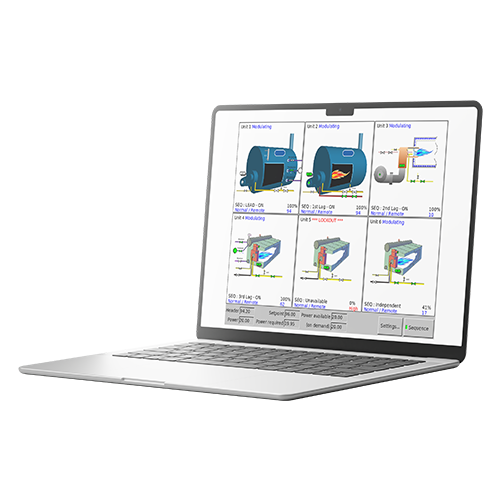
Introducing the innovative Plant Master mode available on the ETC6075 Touchscreen HMI. Plant Master mode utilises the Ethernet to connect up to 10 ETC6000 series controllers to the user interface, making it easier than ever before to analyse boiler results.
Product specifics
Plant Master Mode offers a comprehensive, sophisticated solution for managing multiple boilers within an integrated steam generation system. This mode is designed to optimise efficiency across a range of boilers by enabling them to work in unison, reducing waste and improving overall performance. At the heart of this system is the CANBus sensor, connected to a local ETC6000 controller, which provides precise steam pressure measurements. These measurements enable real-time monitoring and adjustments, ensuring steam generation aligns perfectly with operational demands.
The CANBus sensor plays a major role for the plant master system as it serves as the input source for accurate steam pressure data into the plant master system. This reduces setup complexity while maintaining high levels of accuracy and reliability. The System’s design priorities ease of use and adaptability, making it suitable for a wide variety of industrial environments.
Plant Master Mode offers flexibility in user interfaces, supporting advanced display options like the ETC6075 and ETC6076 touch screens. These displays provide an intuitive, easy-to-navigate system for engineers to monitor and adjust boiler performance in real time. Whether in a control room or on-site, the diverse display options ensure that operators can maintain full control regardless of the operational conditions.
Configuring the Plant Master system is straightforward. Engineers begin by entering high and low fire power outputs for each boiler, which can be specified in megawatts, tonnes per hour, or boiler horsepower. This critical data ensures each boiler operates at optimal capacity. Using a single PID loop, the system dynamically manages total output, automatically adjusting to meet the plant’s changing load requirements. Boiler priorities are also factored in, ensuring that no unit is overworked or underutilised, thereby maximising overall performance.
The Plant Master interface provides engineers with a consolidated view of all boiler operations. This real-time overview includes steam pressure, output levels, and boiler status, making it easier to analyse performance trends, identify issues, and adjust outputs as needed. This functionality ensures optimal system efficiency while simplifying the management of complex multi-boiler setups.
Predictive maintenance is another key feature of Plant Master Mode. By continuously monitoring boiler performance and logging error and change data, the system enables engineers to anticipate when maintenance or replacements may be needed. This proactive approach minimises unplanned downtime, reduces repair costs, and extends the lifespan of boiler equipment. By shifting from reactive to proactive maintenance, the system supports long-term operational efficiency and reliability.
Security is a top priority for the Plant Master system. Robust protocols protect against unauthorised access, with encrypted data transmission ensuring sensitive operational information remains secure. Only authorised personnel can make adjustments or control the system remotely, safeguarding the integrity of the steam generation process.
By integrating multiple boilers into a seamless, streamlined system, Plant Master Mode offers significant benefits in operational efficiency, cost savings, and sustainability. Its intuitive interface, real-time monitoring capabilities, and ability to dynamically adjust outputs ensure consistent performance. Advanced features like predictive maintenance and robust security further enhance its value, making it an indispensable tool for optimising steam generation.
As industries continue to prioritise energy efficiency and operational streamlining, Plant Master Mode stands out as a vital asset for modern facilities. By ensuring greater control, reduced energy costs, and enhanced sustainability, it provides a competitive edge in a rapidly evolving market.

Features
- Continuous Update of Data: A 4G-enabled system allows plant operators to remotely monitor boiler performance, tracking critical parameters such as temperature, pressure, modulation, and oxygen trim. Continuous data flow provides real-time insights, keeping operators informed of the system’s status.
- Reliable Connection: The 4G system provides reliable connectivity in areas lacking traditional wired internet, enabling stable, secure remote monitoring and control, especially in locations with limited access to conventional networks.
- Remote Adjustment: ETC offers systems with remote operation capabilities, allowing operators to adjust parameters, change fuel types, and control the system remotely. These features optimise performance, reduce downtime, and enhance operational flexibility.
- Fuel Maintenance: Remote monitoring enables operators to optimise burner performance, reducing fuel consumption and improving energy efficiency. By analysing detailed fuel usage reports, operators can identify inefficiencies, track performance trends, and make data-driven decisions, contributing to cost savings and sustainability goals.
Benefits
- Real Time Monitoring: Real time monitoring of a large number of boilers allow industries to efficiently monitor their boiler outputs and react quickly to any unintentional shutdowns or boiler alarms that may occur.
- Predictive Maintenance: By remotely monitoring the system and having access to all change and error logs, as well as the general functioning of the boiler plant operators may be able to forecast when certain components will require maintenance
- Security: Data transmission and remote commands are encrypted, ensuring that only authorised personnel can access or control the system.
- Seamless Multi-Boiler Integration: Connect up to 10 ETC6000 controllers for optimised steam generation.